
Loading lot details…
The November 2026 Auction: Part 2
Swipe left for previous · Swipe right for next
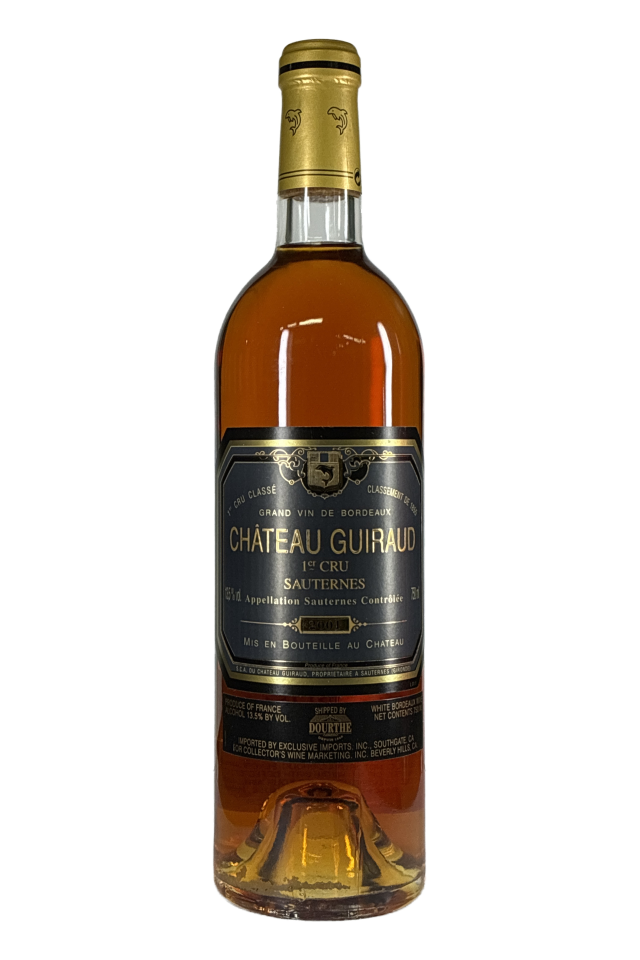 1 / 2
Lot 2519
Estimate: $90
Sold:
This auction has ended. Bidding is closed.
Collection name
Reviews
96WS
"Golden yellow. Butterscotch and vanilla, with hints of ripe apples. Full-bodied, with lots of sweetness and a spicy apricot and honey aftertaste. Excellent concentration and balance. Loads of botrytis character on the finish. Intense. Hard not to drink now because it's so luscious and rich."
Region
Sweet
Country
Score
"Golden yellow. Butterscotch and vanilla, with hints of ripe apples. Full-bodied, with lots of sweetness and a spicy apricot and honey aftertaste. Excellent concentration and balance. Loads of botrytis character on the finish. Intense. Hard not to drink now because it's so luscious and rich."
Have questions?
French wine covers a remarkable range of styles, from the structured reds of Bordeaux to the sparkling wines of Champagne, where a second fermentation in the bottle creates the bubbles. Bordeaux is best known for red blends built around Cabernet Sauvignon or Merlot, but it also makes dry whites and the sweet wines of Sauternes. Burgundy is a benchmark for Pinot Noir and Chardonnay, with wines that can taste distinctly different from one village to the next. The Rhône Valley offers a contrast within a single region: Syrah shapes the reds of the north, while Grenache often leads the blends of the south. In the Loire Valley, Chenin Blanc can be dry, sweet or sparkling, while Cabernet Franc is the signature red grape of appellations such as Chinon and Saumur-Champigny. A French wine label often starts with a place name. The Appellation d’Origine Contrôlée (AOC) identifies a defined area and sets rules for permitted grapes and production. Learning a few appellation names makes it easier to recognize the styles you enjoy and find related wines from neighboring villages or other producers.
The world's largest fine-wine region, built around blends of Cabernet Sauvignon and Merlot. Divided by the Gironde estuary into the structured Left Bank and the plush, Merlot-led Right Bank, it is the historic benchmark for age-worthy claret and sweet Sauternes.
Produces the world's most celebrated sweet wines, made from Semillon and Sauvignon Blanc affected by noble rot. Rich, honeyed and remarkably long-lived, they balance sweetness with vibrant acidity.