
Loading lot details…
The November 2026 Auction: Part 2
Swipe left for previous · Swipe right for next
 1 / 2
Lot 190
Estimate: $95
Sold:
This auction has ended. Bidding is closed.
Collection name
Reviews
98+JD
"The Grand Vin 2020 Château Léoville Poyferré, which is released in a stylish black bottle commemorating a century for the Cuvelier family, is reminiscent of the 2016 with its powerful, concentrated, yet vibrant and inward style. Pure crème de cassis, melted chocolate, loamy earth, graphite, and some spicy nuances all define the aromatics, and it's full-bodied, with a stacked mid-palate, nicely integrated oak, ripe tannins, and one hell of a great finish. This is another utterly brilliant wine from this team, which has been producing First Growth quality wines for many years now. The blend of the 2020 is 64% Cabernet Sauvignon, 31% Merlot, 3% Cabernet Franc, and the rest Petit Verdot, aged in 80% new barrels, hitting 13.58% natural alcohol and a pH of 3.81. It will benefit from just 5-7 years of bottle age and will evolve for 50 years or more if well stored. Bravo. Tasted multiple times with consistent results."
Region
Red
Country
Score
"The Grand Vin 2020 Château Léoville Poyferré, which is released in a stylish black bottle commemorating a century for the Cuvelier family, is reminiscent of the 2016 with its powerful, concentrated, yet vibrant and inward style. Pure crème de cassis, melted chocolate, loamy earth, graphite, and some spicy nuances all define the aromatics, and it's full-bodied, with a stacked mid-palate, nicely integrated oak, ripe tannins, and one hell of a great finish. This is another utterly brilliant wine from this team, which has been producing First Growth quality wines for many years now. The blend of the 2020 is 64% Cabernet Sauvignon, 31% Merlot, 3% Cabernet Franc, and the rest Petit Verdot, aged in 80% new barrels, hitting 13.58% natural alcohol and a pH of 3.81. It will benefit from just 5-7 years of bottle age and will evolve for 50 years or more if well stored. Bravo. Tasted multiple times with consistent results."
Have questions?
French wine covers a remarkable range of styles, from the structured reds of Bordeaux to the sparkling wines of Champagne, where a second fermentation in the bottle creates the bubbles. Bordeaux is best known for red blends built around Cabernet Sauvignon or Merlot, but it also makes dry whites and the sweet wines of Sauternes. Burgundy is a benchmark for Pinot Noir and Chardonnay, with wines that can taste distinctly different from one village to the next. The Rhône Valley offers a contrast within a single region: Syrah shapes the reds of the north, while Grenache often leads the blends of the south. In the Loire Valley, Chenin Blanc can be dry, sweet or sparkling, while Cabernet Franc is the signature red grape of appellations such as Chinon and Saumur-Champigny. A French wine label often starts with a place name. The Appellation d’Origine Contrôlée (AOC) identifies a defined area and sets rules for permitted grapes and production. Learning a few appellation names makes it easier to recognize the styles you enjoy and find related wines from neighboring villages or other producers.
The world's largest fine-wine region, built around blends of Cabernet Sauvignon and Merlot. Divided by the Gironde estuary into the structured Left Bank and the plush, Merlot-led Right Bank, it is the historic benchmark for age-worthy claret and sweet Sauternes.
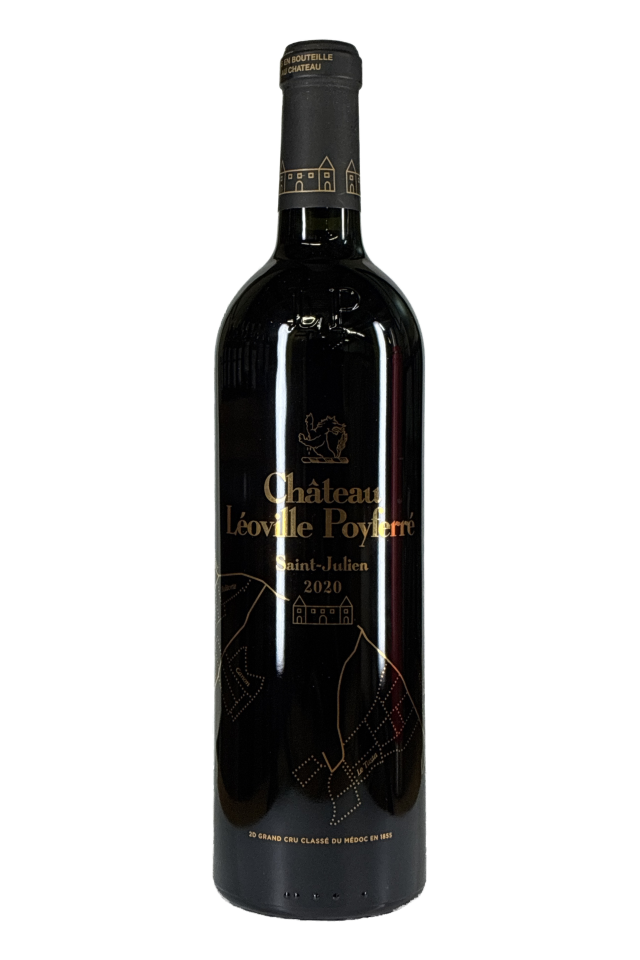
Chateau Leoville Poyferre is a Second Growth estate in Saint-Julien, Bordeaux, known for a richer, more opulent and modern-styled expression of Cabernet-dominated wine.
2020 in Bordeaux, the last of a great trio, was warm and drought-marked, with Merlot excelling; the wines are concentrated and powerful yet fresh, showing deep color, ripe tannins and excellent aging potential.
Cabernet Sauvignon is a red grape known for deep color, firm tannins and a clearly defined structure. Blackcurrant, often described as cassis, is a signature flavor, accompanied by blackberry and, depending on the wine, cedar, graphite, mint or herbal notes. Oak aging can add spice and toast, while bottle age may bring tobacco, leather and other savory layers. The grape is a cornerstone of Bordeaux's Left Bank, especially the Médoc and Graves, where it is commonly blended with Merlot, Cabernet Franc and smaller amounts of other varieties. Beyond Bordeaux, Cabernet Sauvignon has established distinctive regional identities, including Australia's Coonawarra and Margaret River. Vineyard climate and ripeness influence whether the emphasis falls on fresh fruit and herbs or richer, fuller expressions. Its tannins, acidity and concentration can support long development in well-balanced examples. Many accessible styles are made for earlier enjoyment, while more structured wines reward time as their tannins soften and their aromas evolve. Cabernet Sauvignon brings depth and backbone to blends and can also express a vineyard's character as a varietal wine.