
Loading lot details…
The June 2025 Auction: Part 1
Swipe left for previous · Swipe right for next
 1 / 2
Lot 1519
Estimate: $850
This auction has ended. Bidding is closed.
Collection name
Reviews
100WA
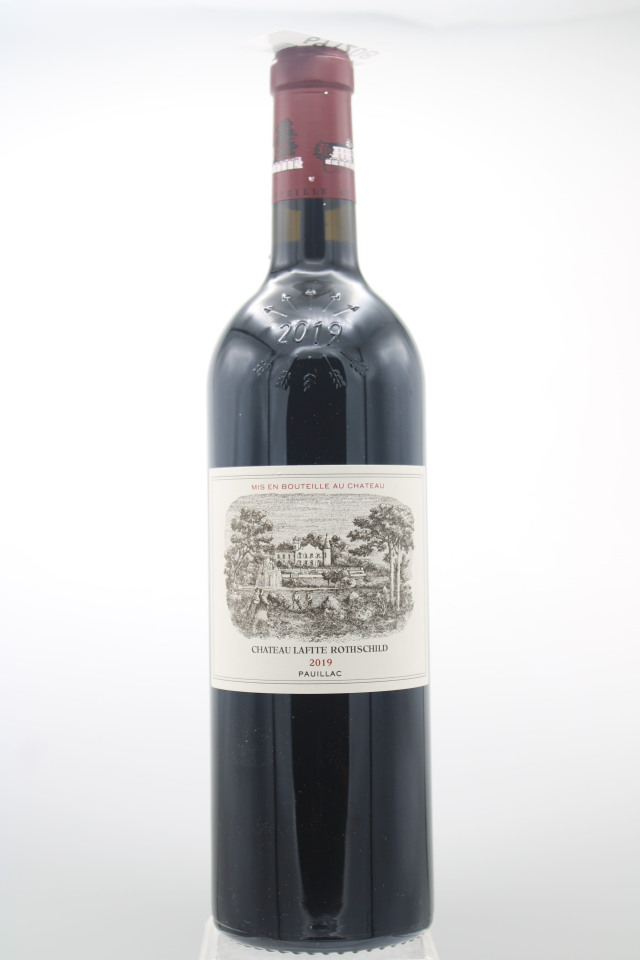
"One of the greatest wines produced in Bordeaux this year is the 2019 Lafite Rothschild, an impeccably balanced classic of immense charm and grace. Wafting from the glass with arresting aromas of cassis, blackberries and cherries mingled with violets, cigar box and warm spices, it's medium to full-bodied, deep and seamless, its velvety attack segueing into a layered, concentrated mid-palate framed by exquisitely powdery tannins and ripe acids, and concluding with a long, perfumed finish. This rivals the 2010 and 2016 as the greatest Lafite of the decade, and of those three vintages, it's clearly the most sensual and demonstrative out of the gates. The blend contains fully 94% Cabernet Sauvignon and attained a modest 13.4% alcohol. Today, Château Lafite Rothschild amounts to some 110 hectares planted to some 900,000 vines (including 4.5 hectares of Cabernet Sauvignon in Saint-Estèphe). If that figure strikes readers as smaller than it used to be, that's because Lafite has ripped up some less optimally situated plots that never tended to produce wine fit for inclusion in the grand vin. As of 2021, what's more, organic conversion is underway (15 hectares are already farmed biodynamically), and hedges and flowering borders, planted with native species, now begin to break up the monoculture of the vine. Cover crops, too, have been added to the viticultural team's agronomic arsenal and are delivering good results in parcels with more humid or clay-rich soils. In the winery, Lafite is meticulously traditional: the grapes are sorted twice, once optically, and see a classical maceration in wooden and cement tanks with pump-overs and some use of the gentle "air pulse" system that disrupts the cap and oxygenates the ferment without the need for a full pump-over. Malolactic fermentation, as ever, is in tank, and the wine matures in barrels that are mostly produced in-house, with a light toast and favoring the forests of Allier and Nevers. Each vintage is racked three times, traditionally, with one egg white fining (which requires up to 8,000 eggs). As is the case almost everywhere in the Médoc, the tendency is for less and less Merlot in the assemblage. Eric Kohler describes 2019 as the ideal growing season, which saw a hydric deficit at just the right moment to precipitate ripening; and the result is a wine of irreproachable classicism and elegance. Whether the 2010, 2016 or 2019 Lafite ultimately emerges as the best of the decade is a question that well-heeled wine lovers will have immense pleasure debating over the decades to come, but it is clear that 2019 is the most sensual and aromatically expressive at an early age. It's one of the wines of the vintage."
Region
Red
Country
Score
"One of the greatest wines produced in Bordeaux this year is the 2019 Lafite Rothschild, an impeccably balanced classic of immense charm and grace. Wafting from the glass with arresting aromas of cassis, blackberries and cherries mingled with violets, cigar box and warm spices, it's medium to full-bodied, deep and seamless, its velvety attack segueing into a layered, concentrated mid-palate framed by exquisitely powdery tannins and ripe acids, and concluding with a long, perfumed finish. This rivals the 2010 and 2016 as the greatest Lafite of the decade, and of those three vintages, it's clearly the most sensual and demonstrative out of the gates. The blend contains fully 94% Cabernet Sauvignon and attained a modest 13.4% alcohol. Today, Château Lafite Rothschild amounts to some 110 hectares planted to some 900,000 vines (including 4.5 hectares of Cabernet Sauvignon in Saint-Estèphe). If that figure strikes readers as smaller than it used to be, that's because Lafite has ripped up some less optimally situated plots that never tended to produce wine fit for inclusion in the grand vin. As of 2021, what's more, organic conversion is underway (15 hectares are already farmed biodynamically), and hedges and flowering borders, planted with native species, now begin to break up the monoculture of the vine. Cover crops, too, have been added to the viticultural team's agronomic arsenal and are delivering good results in parcels with more humid or clay-rich soils. In the winery, Lafite is meticulously traditional: the grapes are sorted twice, once optically, and see a classical maceration in wooden and cement tanks with pump-overs and some use of the gentle "air pulse" system that disrupts the cap and oxygenates the ferment without the need for a full pump-over. Malolactic fermentation, as ever, is in tank, and the wine matures in barrels that are mostly produced in-house, with a light toast and favoring the forests of Allier and Nevers. Each vintage is racked three times, traditionally, with one egg white fining (which requires up to 8,000 eggs). As is the case almost everywhere in the Médoc, the tendency is for less and less Merlot in the assemblage. Eric Kohler describes 2019 as the ideal growing season, which saw a hydric deficit at just the right moment to precipitate ripening; and the result is a wine of irreproachable classicism and elegance. Whether the 2010, 2016 or 2019 Lafite ultimately emerges as the best of the decade is a question that well-heeled wine lovers will have immense pleasure debating over the decades to come, but it is clear that 2019 is the most sensual and aromatically expressive at an early age. It's one of the wines of the vintage."
Have questions?
The world's most influential fine-wine producer and the benchmark for Bordeaux, Burgundy, Champagne and the Rhone. Its appellation (AOC) system codifies geography, grape and method, and its wines set the global standard for age-worthiness and terroir expression.
The world's largest fine-wine region, built around blends of Cabernet Sauvignon and Merlot. Divided by the Gironde estuary into the structured Left Bank and the plush, Merlot-led Right Bank, it is the historic benchmark for age-worthy claret and sweet Sauternes.
Home to three of Bordeaux's five First Growths, Pauillac is the Left Bank benchmark for powerful, structured Cabernet Sauvignon. Its wines are famed for cassis, cedar and graphite notes and exceptional aging potential.
Chateau Lafite Rothschild is a First Growth estate in Pauillac, Bordeaux, celebrated for exceptionally refined, elegant and ageworthy Cabernet-dominated wines, and among the most prestigious names in the world.
2019 in Bordeaux was a warm, balanced vintage that retained freshness despite summer heat spikes; the wines are ripe yet classically proportioned, with silky tannins, aromatic lift, strong value and fine aging potential.
An aromatic red grape lending perfume, red fruit and a leafy, savory edge. It thrives in the Loire and as a key blending partner in Bordeaux, especially Saint-Emilion.
The world's most planted premium red grape, yielding deeply colored, tannic and structured wines with cassis, cedar and graphite notes. Firm tannins and acidity make it exceptionally age-worthy, whether as a varietal or the backbone of a Bordeaux blend.
Produces plush, supple, fruit-forward reds with plum and chocolate notes. Softer and earlier-maturing than Cabernet, it adds flesh and roundness to blends and stars in Right Bank Bordeaux.
A deeply colored, tannic Bordeaux blending grape adding color, structure and floral, spicy complexity in small proportions.