
Loading lot details…
The August 2018 Distinguished Cellar Auction
Swipe left for previous · Swipe right for next
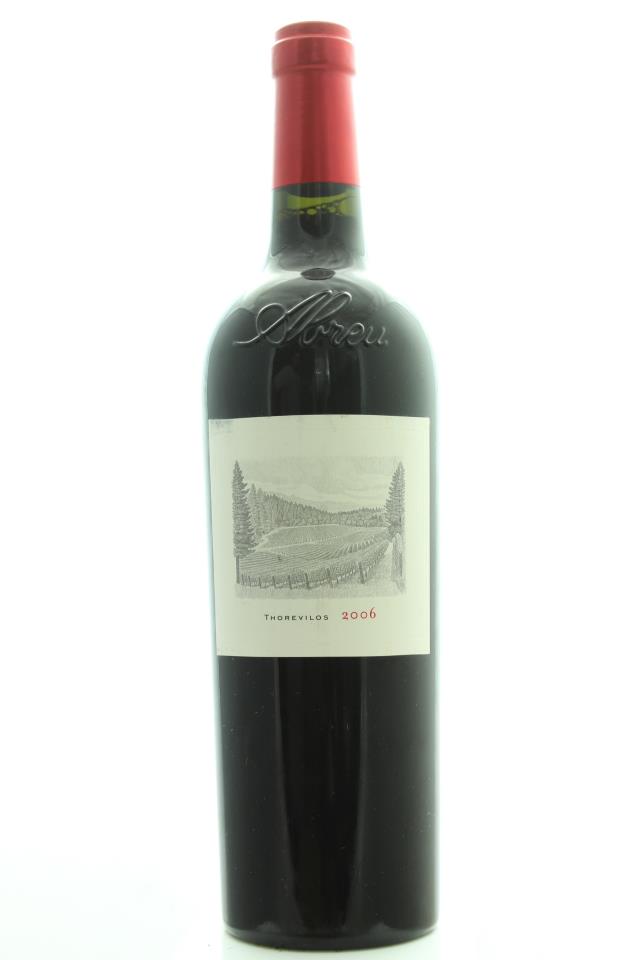 1 / 2
Lot 477
Estimate: $275
Lightly scuffed label.
Sold:
This auction has ended. Bidding is closed.
Collection name
Reviews
98RP
"The 2006 Thorevilos exhibits an extraordinary floral aroma backed up by scents of blueberries, blackberries, espresso roast, and an incredible liqueur of rocks-like component. The compelling floweriness, blue and black fruits, and full-bodied richness make this one of the most distinctive and extraordinary wines of Napa. Strutting its stuff even more this year than it was last year, it should provide immense pleasure over the next 25+ years. I can’t close without saying that it is unfortunate that the story of viticulturists like David Abreu, who is probably more meticulous and dedicated both to his sites and those he consults with than any other viticulturist I have met in Europe or California, combined with his love of French wines and his obsessive pursuit of world-class wines at his own sites, is a story that still hasn’t been told by enough people. Abreu, among many others, is why California has undergone a historic qualitative revolution over the last twenty years. Yet, in many elitist wine circles, it continues to be ignored despite the overwhelming evidence that many California vineyards are better managed than their European counterparts, and the winemaking and vineyard sites are potentially even grander. Heresy in some circles I know, but as always, the truth is in the bottle. In vino veritas! What a line-up of wines from superstar viticulturist David Abreu and his talented winemaking assistant, Brad Grimes! Abreu draws fruit from four sites that he owns partially or completely - the Capella Vineyard in St. Helena, his 12-acre parcel on Howell Mountain, the Madrona Ranch vineyard slightly northwest of Capella on the lower slopes of Spring Mountain, and the extraordinary Thorevilos Vineyard, which he owns with Ric Foreman. The cuvee with the highest percentage of Cabernet Sauvignon comes from Abreu’s 12-acre vineyard on Howell Mountain. David Abreu is proud of this vineyard as it is planted in the red Aiken soils of the region. In addition to approximately 80% Cabernet Sauvignon, the blend includes tiny percentages of Cabernet Franc, Merlot, and Petit Verdot. The amount of Cabernet Franc and Petit Verdot included in these wines appears to be rising dramatically as the percentage of Cabernet Sauvignon drops as Abreu and Grimes recognize the potential for Cabernet Franc in selected Napa sites. Its inclusion gives a wine far more singularity and complexity. However, these are all remarkable wines of great richness and individuality from what I’m sure history will confirm in 50-100 years, some extraordinary grand cru-like vineyard sites. There are about 200-250 cases of each of these cuvees, and, as most readers know, about the only way you will latch on to a bottle or two is to get on the winery’s mailing list. The three vintages of Capella tend to be mostly Cabernet Sauvignon, but also 20-30% Cabernet Franc and some Petit Verdot are included in the blend. Abreu and Grimes are looking to make Capella their St.-Emilion statement for Napa Valley. As utterly profound as all Abreu’s wines tend to be, one vineyard that seems to just knock me over is the site David Abreu co-owns with Ric Foreman, Thorevilos. The percentages of Cabernet Franc and Petit Verdot have jumped dramatically, and, like its siblings, it is no longer entitled to be called a Cabernet Sauvignon, but rather is a Proprietary Red."
Region
Red
Country
Score
"The 2006 Thorevilos exhibits an extraordinary floral aroma backed up by scents of blueberries, blackberries, espresso roast, and an incredible liqueur of rocks-like component. The compelling floweriness, blue and black fruits, and full-bodied richness make this one of the most distinctive and extraordinary wines of Napa. Strutting its stuff even more this year than it was last year, it should provide immense pleasure over the next 25+ years. I can’t close without saying that it is unfortunate that the story of viticulturists like David Abreu, who is probably more meticulous and dedicated both to his sites and those he consults with than any other viticulturist I have met in Europe or California, combined with his love of French wines and his obsessive pursuit of world-class wines at his own sites, is a story that still hasn’t been told by enough people. Abreu, among many others, is why California has undergone a historic qualitative revolution over the last twenty years. Yet, in many elitist wine circles, it continues to be ignored despite the overwhelming evidence that many California vineyards are better managed than their European counterparts, and the winemaking and vineyard sites are potentially even grander. Heresy in some circles I know, but as always, the truth is in the bottle. In vino veritas! What a line-up of wines from superstar viticulturist David Abreu and his talented winemaking assistant, Brad Grimes! Abreu draws fruit from four sites that he owns partially or completely - the Capella Vineyard in St. Helena, his 12-acre parcel on Howell Mountain, the Madrona Ranch vineyard slightly northwest of Capella on the lower slopes of Spring Mountain, and the extraordinary Thorevilos Vineyard, which he owns with Ric Foreman. The cuvee with the highest percentage of Cabernet Sauvignon comes from Abreu’s 12-acre vineyard on Howell Mountain. David Abreu is proud of this vineyard as it is planted in the red Aiken soils of the region. In addition to approximately 80% Cabernet Sauvignon, the blend includes tiny percentages of Cabernet Franc, Merlot, and Petit Verdot. The amount of Cabernet Franc and Petit Verdot included in these wines appears to be rising dramatically as the percentage of Cabernet Sauvignon drops as Abreu and Grimes recognize the potential for Cabernet Franc in selected Napa sites. Its inclusion gives a wine far more singularity and complexity. However, these are all remarkable wines of great richness and individuality from what I’m sure history will confirm in 50-100 years, some extraordinary grand cru-like vineyard sites. There are about 200-250 cases of each of these cuvees, and, as most readers know, about the only way you will latch on to a bottle or two is to get on the winery’s mailing list. The three vintages of Capella tend to be mostly Cabernet Sauvignon, but also 20-30% Cabernet Franc and some Petit Verdot are included in the blend. Abreu and Grimes are looking to make Capella their St.-Emilion statement for Napa Valley. As utterly profound as all Abreu’s wines tend to be, one vineyard that seems to just knock me over is the site David Abreu co-owns with Ric Foreman, Thorevilos. The percentages of Cabernet Franc and Petit Verdot have jumped dramatically, and, like its siblings, it is no longer entitled to be called a Cabernet Sauvignon, but rather is a Proprietary Red."
Have questions?
The fourth-largest wine producer in the world, led by California. American fine wine is defined by ripe, expressive fruit and a spirit of innovation, with Napa Valley Cabernet Sauvignon among the most sought-after wines globally.
California's most prestigious wine region, celebrated worldwide for opulent, structured Cabernet Sauvignon. Diverse soils and mountain-to-valley-floor sites yield wines of remarkable ripeness, power and longevity.
California's flagship appellation for opulent, structured Cabernet Sauvignon of ripe fruit, plush tannins and cellar-worthy depth.
Abreu Vineyards ranks among Napa Valley’s most coveted producers, pairing David Abreu’s meticulous vineyard work with winemaker Brad Grimes’s talent for crafting Bordeaux-style reds of remarkable depth, polish, and longevity. Its four celebrated vineyard properties each bring a distinctive identity: Madrona Ranch, the founding estate on St. Helena’s western side, offers exceptional complexity from its varied soils and terrain; nearby Cappella, a six-acre site first planted in 1869, contributes a historic pedigree and beautifully expressive wines; Thorevilos, in the hills between the St. Helena and Howell Mountain appellations, produces powerful, intensely structured reds; and Las Posadas, perched roughly 2,000 feet above sea level on Howell Mountain, delivers concentrated mountain character. Together, these sites also underpin Rothwell Hyde, blending Madrona Ranch and Cappella, and Tilting Rock, combining Thorevilos and Las Posadas. Among Abreu’s standout vintages are 2013, 2015, 2016, and 2018, with numerous wines earning perfect scores—including the 2013 Madrona Ranch, Thorevilos, and Las Posadas from Robert Parker’s Wine Advocate. Combining extraordinary vineyard sites, exacting farming, and a consistent record of exceptional wines, Abreu remains a benchmark for collectors seeking Napa Valley at its finest.
An aromatic red grape lending perfume, red fruit and a leafy, savory edge. It thrives in the Loire and as a key blending partner in Bordeaux, especially Saint-Emilion.
The world's most planted premium red grape, yielding deeply colored, tannic and structured wines with cassis, cedar and graphite notes. Firm tannins and acidity make it exceptionally age-worthy, whether as a varietal or the backbone of a Bordeaux blend.
Produces plush, supple, fruit-forward reds with plum and chocolate notes. Softer and earlier-maturing than Cabernet, it adds flesh and roundness to blends and stars in Right Bank Bordeaux.
A deeply colored, tannic Bordeaux blending grape adding color, structure and floral, spicy complexity in small proportions.