
Loading lot details…
The Summer 2017 Auction
Swipe left for previous · Swipe right for next
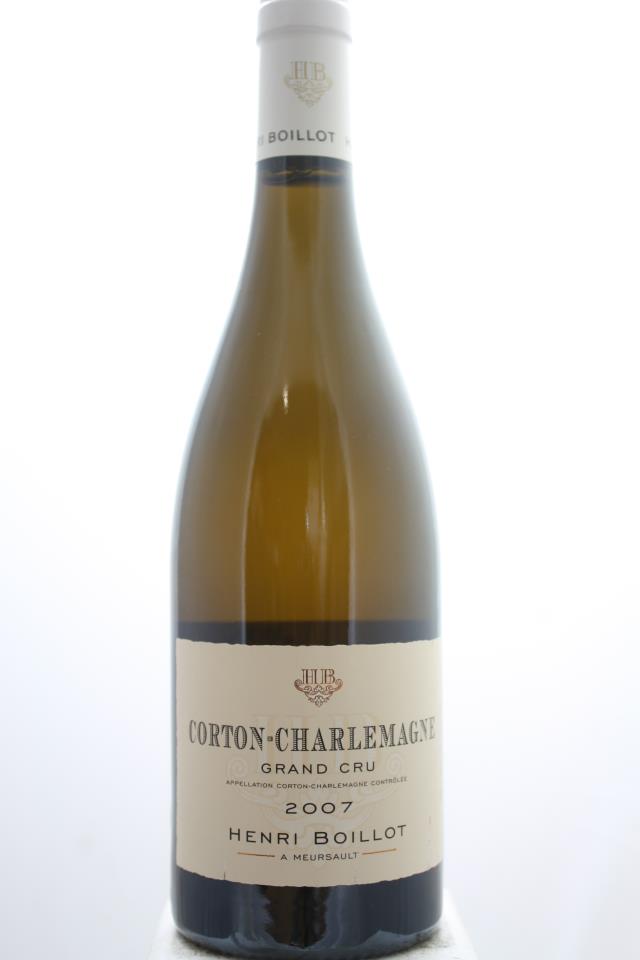 1 / 2
Lot 1172
Estimate: $160
Sold:
This auction has ended. Bidding is closed.
Collection name
Reviews
97 · 96
97 WA "Once again we are confronted with the paradox of a 2007 Corton-Charlemagne (here harvested late in the third week of September at 13% natural alcohol) that its producer proffers after the other, far more expensive grand crus. But rather than try to make sense of this situation, I recommend you just try to get hold of some bottles of the wine! The notion of "dynamic interchange" comes up repeatedly in attempting to explain what makes the best 2007 white Burgundies so exciting, and there is no better expression to use here, either. This wine is like a complex and graceful ballet between groups of dancers marked "fruit," "mineral," "floral," and "animal." These players include pear, apricot, and lime; chalk, white pepper, salt crustacean shell reduction, chicken broth, and a carpet of flowers: in short, the usual suspects. And here, too, we have soothing and seductive creaminess combined with refreshment, transparency to nuance, and electric energy (even though soothing seduction is not usually delivered by youthful Corton Charlemagne). This possesses all of these features, but to an exceptional degree, as well as a sense of purity and lift somehow perfectly compatible with detonative finishing intensity. As explained in my report in issue 180, Henri Boillot’s domaine is now legally known by his name rather than that of his father Jean, and is thus eponymous with his negociant business. Furthermore, given what seems to be a stylistic convergence as well as given Boillot's own preference in presenting his wines this year, I have folded together the coverage of these two entities, noting in the text of my notes those wines that come from the domaine. Boillot did not begin picking until the second week in September, harvesting fruit that he reported required only occasional, minimal chaptalization and had higher tartaric than malic acid, in contrast to their proportions in 2008. Since Boillot managed to achieve his ideals of “precision and minerality” even in the ripe 2006 vintage, it will come as no surprise that they have been brilliantly achieved in 2007. A preference for volume of healthy lees rather than their stirring and (as mentioned in my report on his 2006s) the utilization of 350-liter barrels rather than barriques are surely among the factors that permit these wines to marry richness with refreshment and clarity. On the other hand, even the wines of lesser appellation that receive less barrel exposure are still given extended time on their fine lees in tank before bottling, Boillot being a believer that "time is of the essence" to great white Burgundy, not in the proverbial sense but rather in that of taking enough if it." 96 AM ...a strikingly pure nose of green apple, white flower and spice aromas complements perfectly the delicious, intense and stony flavors…
Region
White
Country
Score
97 WA "Once again we are confronted with the paradox of a 2007 Corton-Charlemagne (here harvested late in the third week of September at 13% natural alcohol) that its producer proffers after the other, far more expensive grand crus. But rather than try to make sense of this situation, I recommend you just try to get hold of some bottles of the wine! The notion of "dynamic interchange" comes up repeatedly in attempting to explain what makes the best 2007 white Burgundies so exciting, and there is no better expression to use here, either. This wine is like a complex and graceful ballet between groups of dancers marked "fruit," "mineral," "floral," and "animal." These players include pear, apricot, and lime; chalk, white pepper, salt crustacean shell reduction, chicken broth, and a carpet of flowers: in short, the usual suspects. And here, too, we have soothing and seductive creaminess combined with refreshment, transparency to nuance, and electric energy (even though soothing seduction is not usually delivered by youthful Corton Charlemagne). This possesses all of these features, but to an exceptional degree, as well as a sense of purity and lift somehow perfectly compatible with detonative finishing intensity. As explained in my report in issue 180, Henri Boillot’s domaine is now legally known by his name rather than that of his father Jean, and is thus eponymous with his negociant business. Furthermore, given what seems to be a stylistic convergence as well as given Boillot's own preference in presenting his wines this year, I have folded together the coverage of these two entities, noting in the text of my notes those wines that come from the domaine. Boillot did not begin picking until the second week in September, harvesting fruit that he reported required only occasional, minimal chaptalization and had higher tartaric than malic acid, in contrast to their proportions in 2008. Since Boillot managed to achieve his ideals of “precision and minerality” even in the ripe 2006 vintage, it will come as no surprise that they have been brilliantly achieved in 2007. A preference for volume of healthy lees rather than their stirring and (as mentioned in my report on his 2006s) the utilization of 350-liter barrels rather than barriques are surely among the factors that permit these wines to marry richness with refreshment and clarity. On the other hand, even the wines of lesser appellation that receive less barrel exposure are still given extended time on their fine lees in tank before bottling, Boillot being a believer that "time is of the essence" to great white Burgundy, not in the proverbial sense but rather in that of taking enough if it." 96 AM ...a strikingly pure nose of green apple, white flower and spice aromas complements perfectly the delicious, intense and stony flavors…
Have questions?
The world's most influential fine-wine producer and the benchmark for Bordeaux, Burgundy, Champagne and the Rhone. Its appellation (AOC) system codifies geography, grape and method, and its wines set the global standard for age-worthiness and terroir expression.
Produces the world's most revered Pinot Noir and Chardonnay from a mosaic of tiny, terroir-defined climats. Its hierarchy of village, Premier Cru and Grand Cru vineyards makes site the ultimate expression of quality.
Aloxe-Corton is a village AOC in Burgundy's Cote de Beaune, ringing the Corton hill and holding Premier Cru vineyards; it produces mostly firm, structured, earthy Pinot Noir reds built for medium-term aging.
The world's most versatile white grape, producing everything from steely Chablis to rich, oaked whites. Its neutrality makes it a mirror of terroir and winemaking, and the foundation of white Burgundy and Champagne.