Loading lot details…
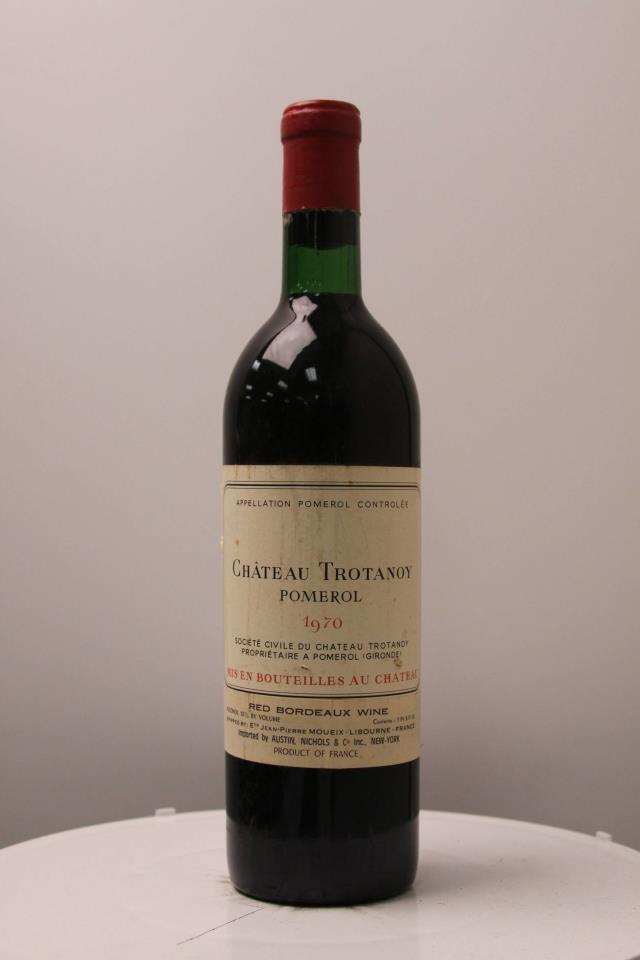
The January 2012 Internet-Only Auction Part 1
Swipe left for previous · Swipe right for next
Lot 1050
Estimate: $425
Base neck; bin soiled and nicked label.
This auction has ended. Bidding is closed.
Collection name
Reviews
96JG
"The 1970 Trotanoy is a great vintage for this fabled château, though it is a vintage that has taken its sweet time in maturing. At age thirty-six it is just now really beginning to show all of its fine constituent components, and offers every possibility of delighting the senses for the next fifty years. It seems clear that this is the last old styled vintage of Trotanoy, as the 1971 and 1975 are much more polished examples of this fine terroir than is the 1970 and the vintages that preceded it. We had a pair of 1950 right bank wines after the flight that included the ’70 Trotanoy, and those two old school wines clearly showed the 1970 Trotanoy to be cut from that same cloth. The bouquet is deep and old-fashioned in the best sense, as it offers up a mélange of plums, blood oranges, chocolate, tobacco, woodsmoke, a bit of venison and damp earth. On the palate the wine is full-bodied, deep and broad-shouldered, with great purity now emerging (this was hardly the case with this wine even five years ago). The core of the wine is rock solid, the tannins ripe and well-integrated, but still substantial, and finish long, complex and rapier-like in terms of grip and intensity of flavor. This is a profound wine that I had my doubts about ever emerging from its chewy adolescence with anywhere near this degree of breed and complexity, but the ’70 Trotanoy has now begun to reach its plateau of maturity, and is poised to take its rightful place amongst the very finest wines of this excellent vintage."
Region
Red
Country
Score
"The 1970 Trotanoy is a great vintage for this fabled château, though it is a vintage that has taken its sweet time in maturing. At age thirty-six it is just now really beginning to show all of its fine constituent components, and offers every possibility of delighting the senses for the next fifty years. It seems clear that this is the last old styled vintage of Trotanoy, as the 1971 and 1975 are much more polished examples of this fine terroir than is the 1970 and the vintages that preceded it. We had a pair of 1950 right bank wines after the flight that included the ’70 Trotanoy, and those two old school wines clearly showed the 1970 Trotanoy to be cut from that same cloth. The bouquet is deep and old-fashioned in the best sense, as it offers up a mélange of plums, blood oranges, chocolate, tobacco, woodsmoke, a bit of venison and damp earth. On the palate the wine is full-bodied, deep and broad-shouldered, with great purity now emerging (this was hardly the case with this wine even five years ago). The core of the wine is rock solid, the tannins ripe and well-integrated, but still substantial, and finish long, complex and rapier-like in terms of grip and intensity of flavor. This is a profound wine that I had my doubts about ever emerging from its chewy adolescence with anywhere near this degree of breed and complexity, but the ’70 Trotanoy has now begun to reach its plateau of maturity, and is poised to take its rightful place amongst the very finest wines of this excellent vintage."
Have questions?
The world's most influential fine-wine producer and the benchmark for Bordeaux, Burgundy, Champagne and the Rhone. Its appellation (AOC) system codifies geography, grape and method, and its wines set the global standard for age-worthiness and terroir expression.
The world's largest fine-wine region, built around blends of Cabernet Sauvignon and Merlot. Divided by the Gironde estuary into the structured Left Bank and the plush, Merlot-led Right Bank, it is the historic benchmark for age-worthy claret and sweet Sauternes.
A tiny, prestigious Right Bank appellation famed for opulent, velvety Merlot-based wines. Iron-rich clay soils yield some of the world's most coveted and concentrated reds.
Produces plush, supple, fruit-forward reds with plum and chocolate notes. Softer and earlier-maturing than Cabernet, it adds flesh and roundness to blends and stars in Right Bank Bordeaux.